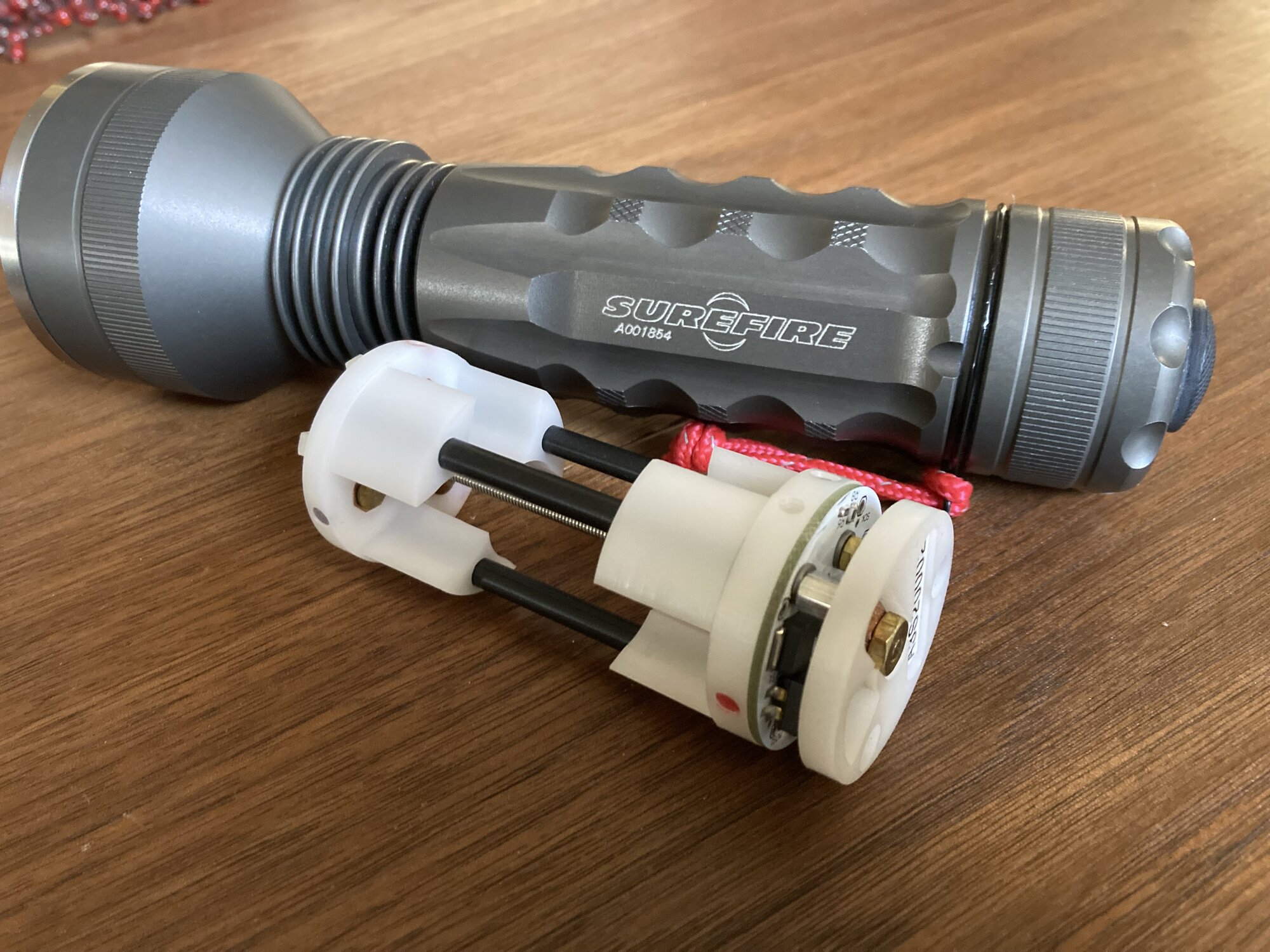
I'm probably not the best member to piece together the history of soft start options for incandescents, but one of the early pioneers was Willie Hunt and his LVR. Maybe one of the electrical engineers here can give a better explanation of how it operates, but it ramps up voltage to "soft start" the bulb to avoid the common failure of tungsten filaments during the initial inrush of current. It would also maintain a consistent voltage throughout the life of the batteries to avoid the bulb dimming gradually as the batteries depleted. It would blink when the batteries could no longer power full regulation and would drop to direct drive. Various versions of the LVR were used by TigerLight, LightingPro, Petzel, and Surefire. I don't have examples in my collection of everything that used LVRs, but here are a few:
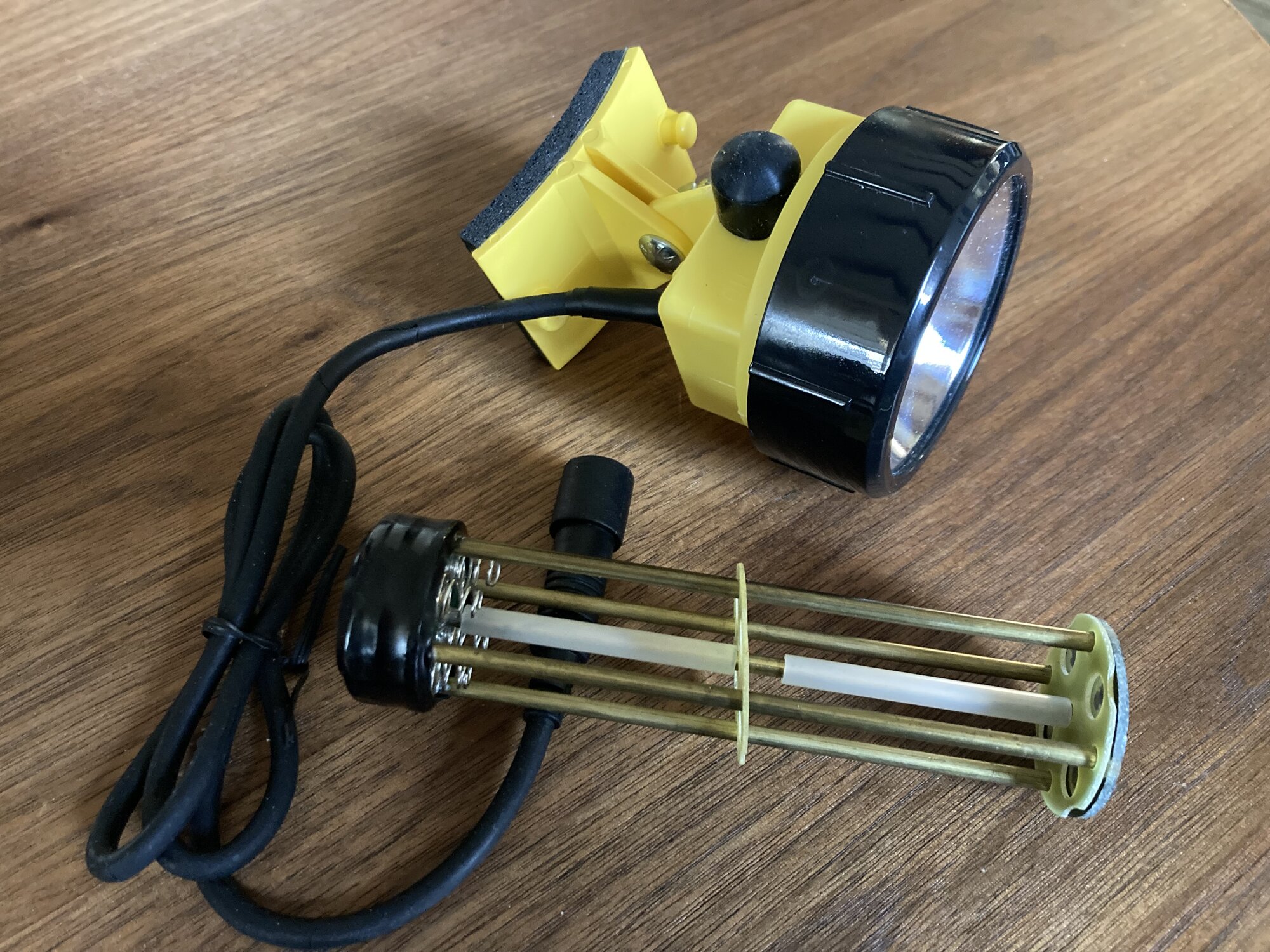
LightingPro headlamp and 2D to 8AA regulated PowerStik:
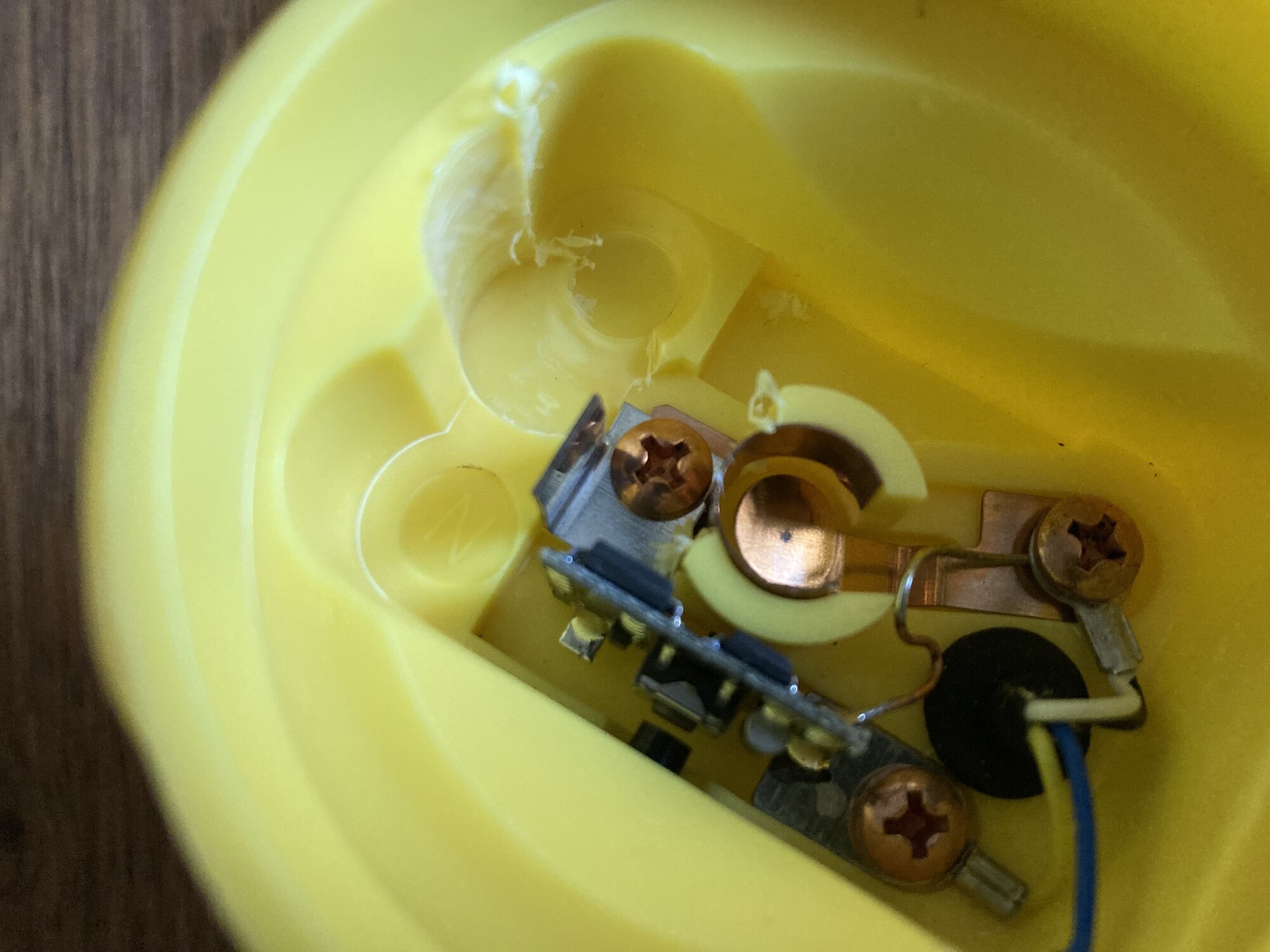
The Powerstik had an LVR in the bottom of the pack and regulated at approximately 3.6V. There were various headlamps, but this model had the LVR in the headlamp with three brightness levels and regulated at approximately 4.8V with 5AA battery pack. LVR pictured:
I picked up three of these on eBay for $15 each to reuse the LVRs in some of my antique lights.
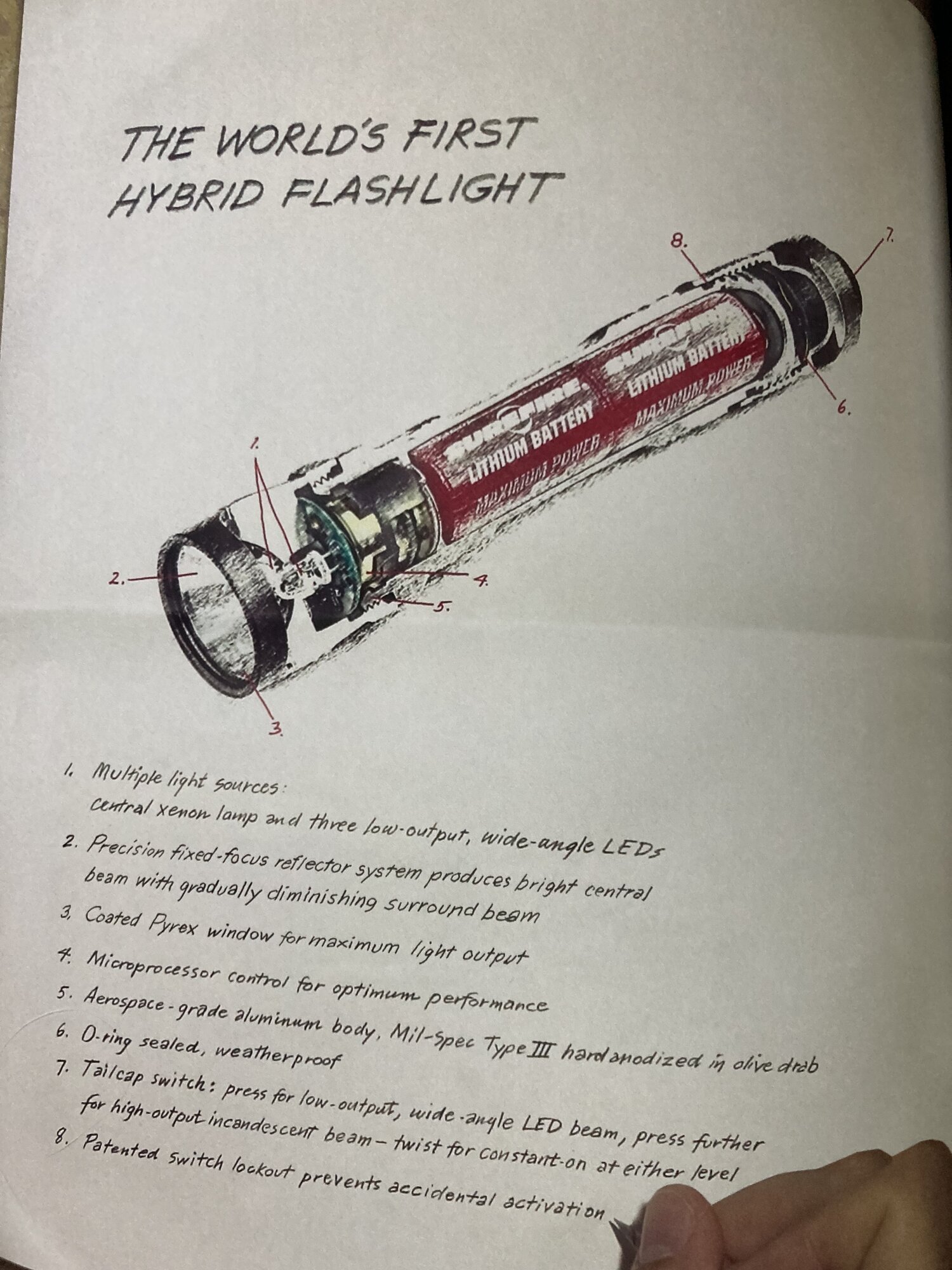
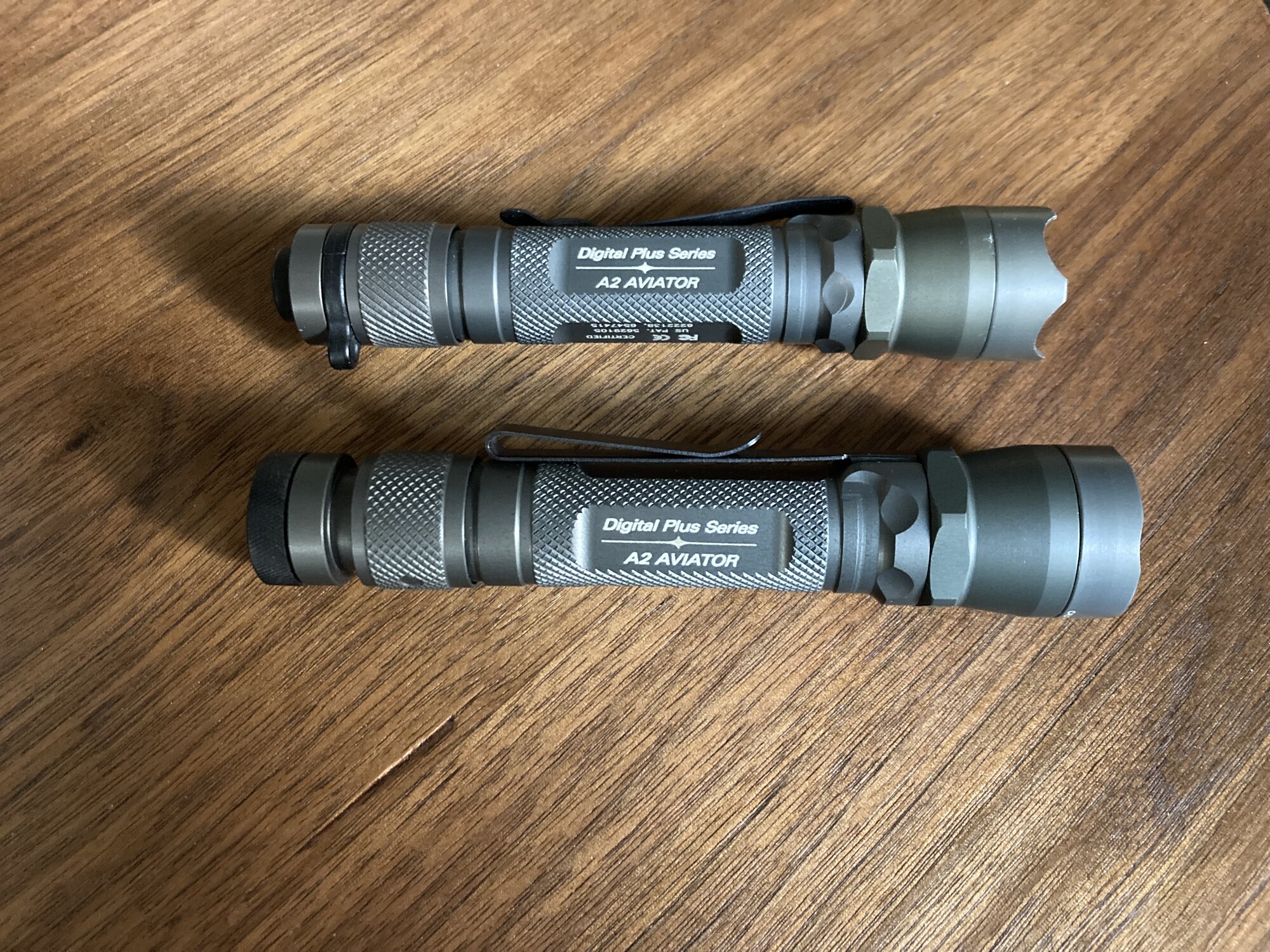
Surefire used an LVR in their fantastic A2:
Several talented CPFers developed their own versions of soft start regulators including wquiles, Alan B, and JimmyM. The last two developed regulators with a lot of flexibility in setting voltage levels for modded Maglites. wquiles designed an amazing PhD M6 3x17670 regulated battery pack that included the option to manually switch voltages for common SF turbohead lamps:
However, as lithium-ion batteries started to become more available and used in incandescent flashlights, the flatter discharge curve as compared to older battery technologies meant a pricey regulator was less necessary. However, incandescent lamps powered by li-ions are still vulnerable to instaflash when first powered on. AW, who did much to make many sizes of quality li-ions available to CPF, developed a simple soft start switch with three brightness settings. These switches could screw into C series and M6 tailcaps. M6 AW softstart pictured:
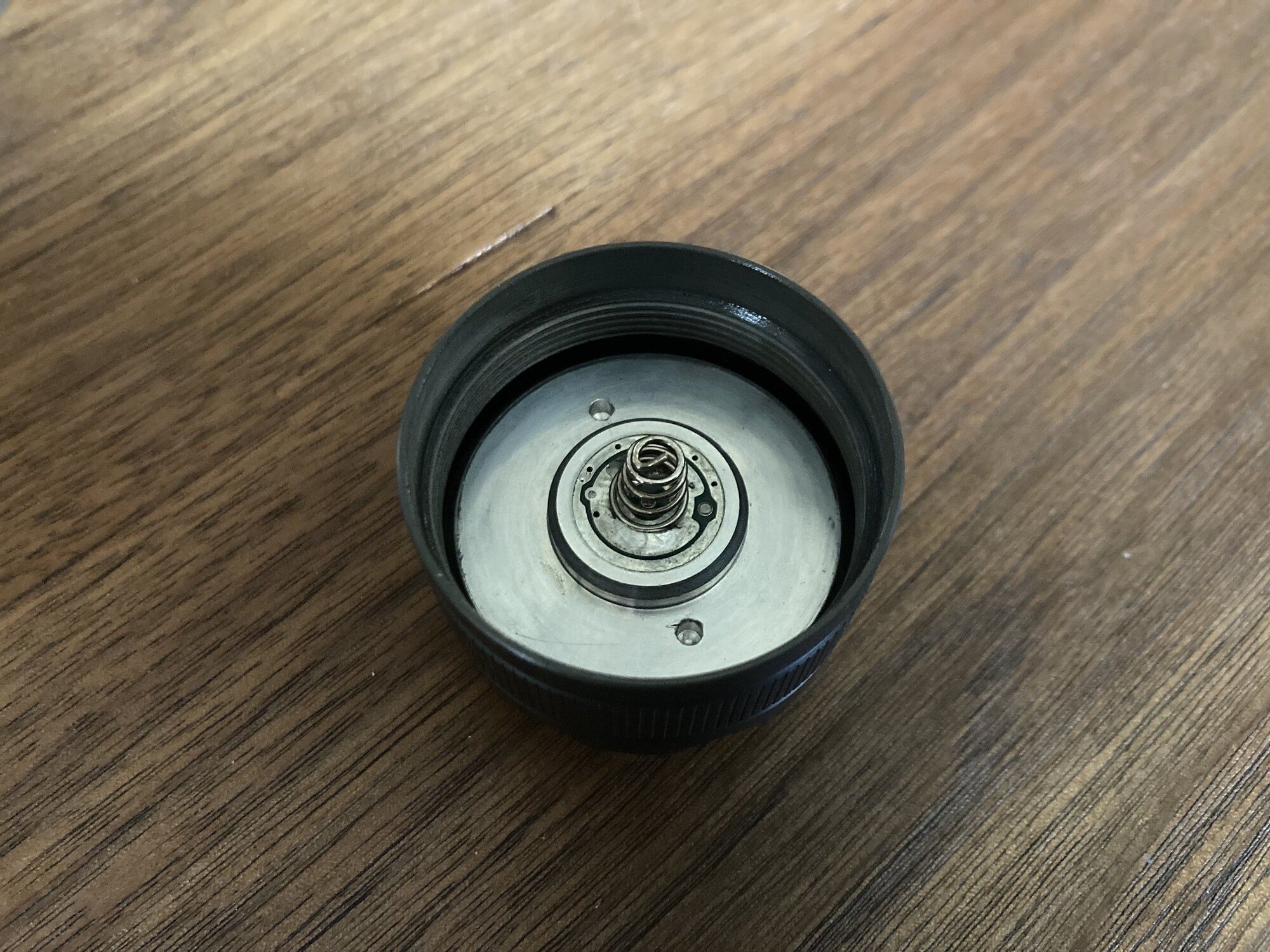
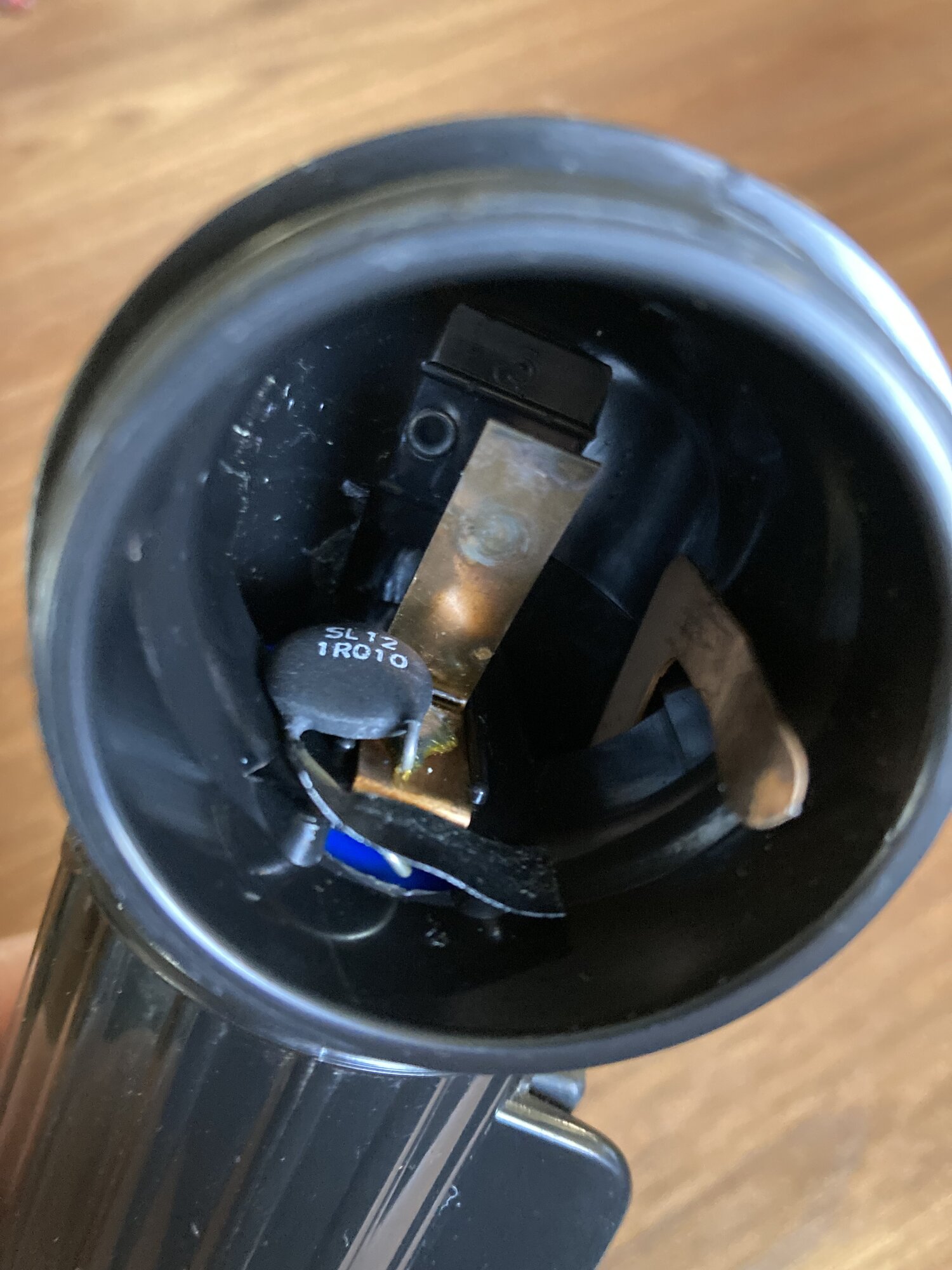
These products are a wonderful part of CPF history, but only rarely come up for sale. As mentioned earlier, with current high drain battery options today, full regulation isn't that much of a benefit as long as the battery voltage is well matched to the lamp. However, a softstart is still very useful. If you have some soldering skills, a very inexpensive option is to solder a NTC in the electrical path of the flashlight, typically in the tailcap spring, but it can work wherever it fits best. Just select an NTC between 1 and 10 Ohms and check the specs to make sure the amp limit works for your setup. Here's a pic of an NTC installed in the neck of a Fulton:
Happy modding!