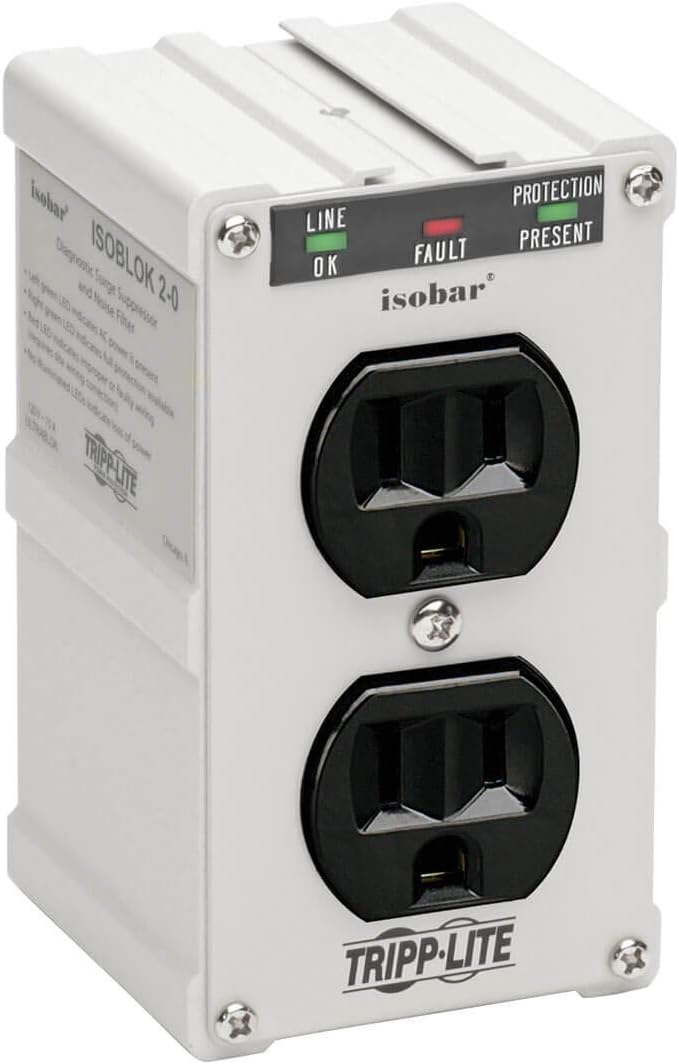
Thanks for the tip on the surge protectors.
I've lost equipment from nearby lightning strikes. Not from the strike directly but from the massive EMP it produced. It was usually the 1488 or 1489 TTL to RS232 chips. Those things would blow out if you looked at the sideways. I wound up putting sockets i those positions on the boards so I could swap them out quickly. I kept a tube of those ICs on hand.
Network switches are notoriously bad down here, in particular those with PoE ports. Cisco switches are great at operating at high temperatures, and I use them in areas which aren't air conditioned, BUT, only their non-PoE switches. Cisco with PoE blow ports constantly, even with proper grounding/shielding. The old HP Procurve stuff was bulletproof. And if it wasn't, their lifetime overnight replacement warranty was awesome. I intentionally keep a few HP switches between me and the outside world as sacrificial fuses in the data centers. Lately I've been using TP-Link managed PoE switches for awhile at the advice of a local IP phone guy and knock on wood they've held up so far. Multiple tropical systems and the usual Florida thunderstorms.
On the consumer side, modems seem to get hit a lot, whether it be POTS, ISDN, T1, or Coax. Proper surge protection on the incoming lines does help, but EMP does these in even with protection, and I've had that happen.
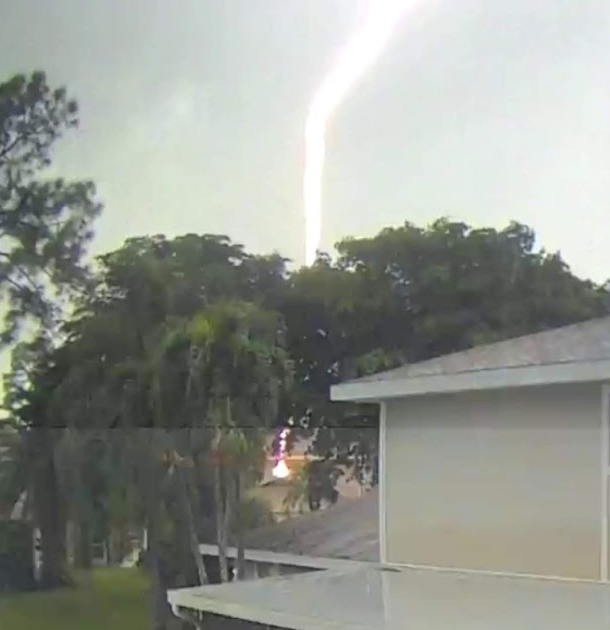
I lost a cable modem after this lightning strike hit the house behind me. Note the EMP interference which appears like a rolling shutter, causing the lower 1/4 of the CCTV image to appear lighter. Nice shower of sparks in the actual video. Surprisingly, no damage to their place other than some electronics.
The worst lightning damage I saw was at a transmitter site. Typical FL summertime nasty thunderstorm. Close lightning then all of our monitor TVs went blank for the MMDS transmitters. After the lightning let up a bit we drove over to the transmitter site and found part of the antenna on the ground, one end melted. The tower looked alright BUT the thick Heliax cable now had a large hole in it, where it made the 90 degree turn from vertical to horizontal as it made its way into the transmitter doghouse. Inside was a mess. We had a bunch of these TrippLite protectors on every outlet in the room. Every single one of them had s**t stains splattering the walls and floor around them. Some of them were no longer attached to the wall but were in pieces on the floor. It took us about two hours to clean up the mess in there, including replacing every outlet. We'd later replace the circuit breaker panel & breakers that month. After the cleanup, for fun I tried powering up one of the racks. The voltage regulator on the rack came online, no issues. I measured it extensively with and without a load (space heater) to make sure before connecting the real equipment. All of it came on, including the transmitter. Over the next couple of hours, we did some back-of-the-napkin math and built a new antenna with coat hangers, plumber's solder, and a blowtorch. I think we were back on-air within 4 hours.
After everything was put back to normal, we did a bit of failure analysis and determined the issue was the doghouse was added to a larger building and had its own grounds, and the building had multiple grounds as well, with each addition getting a new one. Multiple grounds in FL = lightning magnet. We discussed this with building maintenance hoping to get things down to a single ground, but they weren't interested. So we cut and floated all of ours. The next time lightning came to town, the transmitter room was fine, but the building lost quite a bit of gear including the HVAC chiller controls. My responsibility was the doghouse, no further. Not my problem. :)
Power was out in my neighborhood from about 2 PM until 4:15 PM.
Used my Zebralight H54 Fc N and my Zebralight SC53c to get around.
(Also used my Prometheus MXS Standby to find my other lights,as it turns on automatically when the power goes out.)
My Wurkkos CL01 was used (sparingly) to light up my apartment.
Don't be afraid to run the Wurkkos CL01. It's battery life is unusually good. When we travel, I set one up in the bathroom on a lower setting, basically moon, then increase the brightness to the very next step. Even running it for 10-12 hours like that each night, after a week it still shows 3/4 full.
I'd never go into a room with lights on timers without a light source of my own. Learned that the not-so-hard way at the bathrooms of the clinic my mother gets treatment at. Not-so-hard because even the first time, I had a torch I could tailstand.
I ran into this at the office. They replaced the bathroom light switches with motion sensors. And the elechicken forgot to take it out of test mode, so 20 seconds after I walked in, the lights went out, and I was already sitting. Fenix E05 to the rescue!