The 2BF Bedside Torch

Candle Power Forums

Help Support Candle Power:

Sounds like the duplex pack.
A 4/5sc is the same size cell.
so 2 4/5sc nicad or nimh will sub.
No mods at all.
Next step and the one i prefer is a 21700 li-ioncand some form of 3.6v bulb.
No plastic to melt in most of these so whether a e10 or p13.5s base there are lots of potential bulbs to play with.
a neighbor has one he got in Germany 60 years ago.
Its been a shelf queen most of the time.
Now it has a 5000mah 21700 and xenon bulb.
And he uses it every night on dog walks.
Heavy walled brass and thick chrome.
No plastic anywhere.
 
No - SubC, at ~22.5mm is too big to fit in any of these torches.
The BF cells were 13/16" diameter - that's 20.6mm. The diameter difference is not really apparent in my photos in post #2, but the SubC is 2mm fatter.

So either 20700 or 21700 cells are ideal, which you use depending on the torch. The later Bijou models with PR4 bulb accommodate the 21700 with a PR7 bulb, whereas ye olde fisheyes are better off with the 20700 with a 3.8V #13 vacuum bulb.

These new cell sizes have elevated these torches to bedside torch perfection.

The modern No8 Unit cell, still made in UK, France and Germany until about 20 years ago, had a thick plastic shell around the BF cells and measure 21.8mm diameter. They are intended for instrument service, and really, this is too thick for these torches - you find the switch gouges a trench in the side of the battery.

This phenomenon of batteries growing in diameter also applies to C cells, the 1914 cardboard torch will not accommodate modern alkaline, NiMH , NiCd or super-heavy duty zinc chloride batteries, they are all to big.
But standard duty C cells (you really have to scour nickel-and-dime stores for these nowadays!) fit and work beautifully.
 
  • Like
Reactions: xxo
Depends on how much "slop" the design has.
2 4/5 sc fit one of mine perfectly.
A better light with closer tolerances to prevent rattle might not work.
And the o.d creep in modern batteries is an issue.
I have a early 1st gen mini maglite that eneloops go into wth a air cushion effect.
And some rechargeables went long but shortened the + contact to eek out a bit more capacity
 
The duplex pack was sold in Australia from the early 1970s - 927s suddenly went off the market and the duplex appeared in its place. Until the early 1980s, when even those disappeared. As I said, British No8's are fatter, which may explain why 4/5 SubCs fit in English examples. It's like Whitworth vs SAE.
 
Never seen a BF battery or light in the US.

You could probably 3D print a 2X BF adapter to run a single CR123A if you wanted to use the original bulbs.
 
As an Amazon Associate we earn from qualifying purchases. Product prices and availability are accurate as of the date/time indicated and are subject to change.
This phenomenon of batteries growing in diameter also applies to C cells, the 1914 cardboard torch will not accommodate modern alkaline, NiMH , NiCd or super-heavy duty zinc chloride batteries, they are all to big.
But standard duty C cells (you really have to scour nickel-and-dime stores for these nowadays!) fit and work beautifully.
1914 was way before there was any real standardization, each manufacturer had their own proprietary batteries back then. Even today C cell lights are not generally made to fit the maximum diameter allowed in the specs, because no one makes C cells that fat so the flashlight manufactures size their battery tubes accordingly, probably to minimize battery rattle.

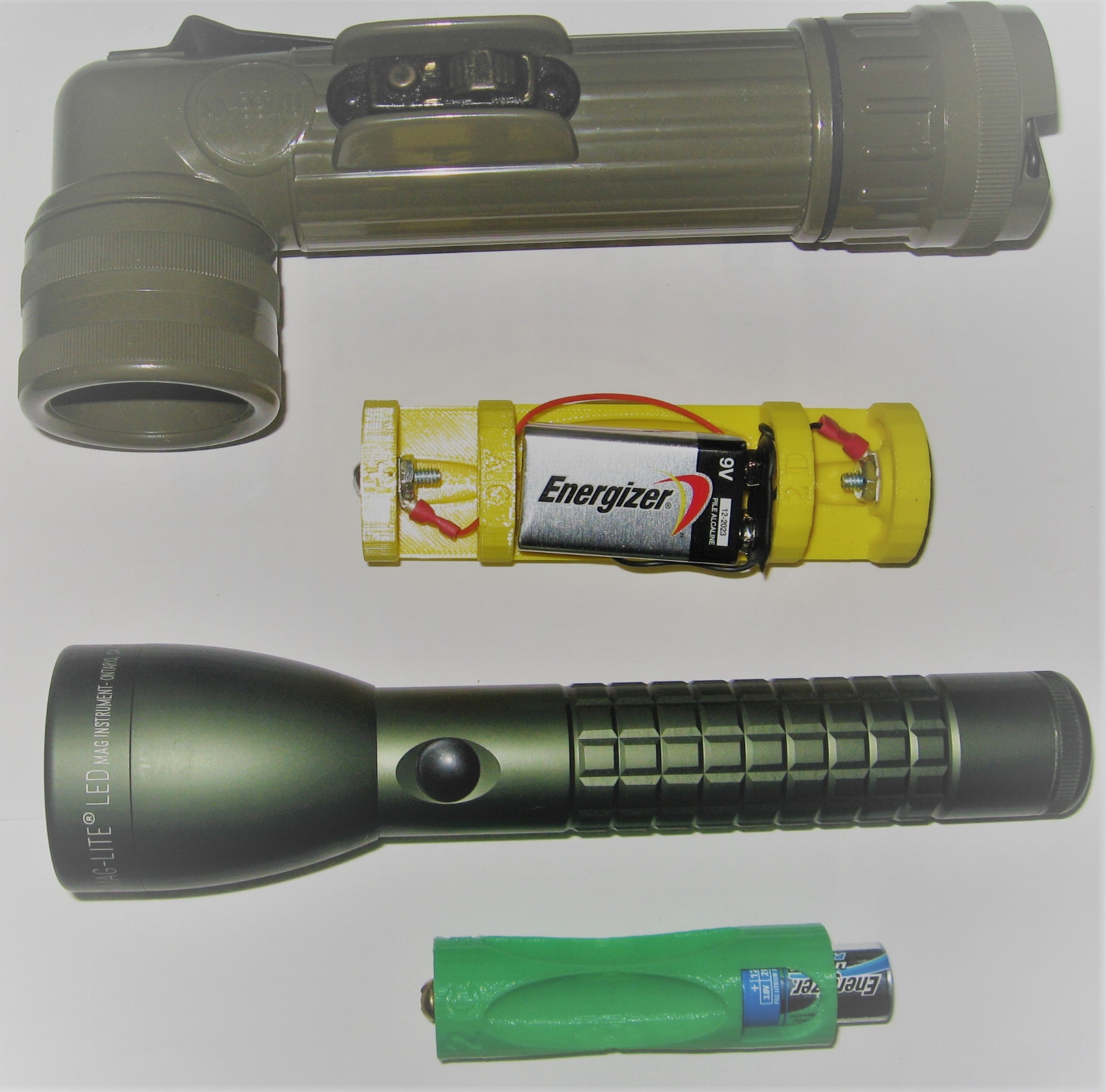
A 3D printed 2C to CR123A adapter should work well in the old lights, I actually printed a couple 2C to CR123A adapters (the green one on the bottom):

2HLFXwR.jpg


Running 2X AA's in undersized AA to C sleaves is another option, but AA's might be a bit longer than the original C cells.
 
Gotra love 3d printers.
Adapt any cell to any light and no alkaleak danger.
Great prank is to have an oldie with an adapter and 2x li cells with a rop low.
Folks think its empty and when you tell them its not they often look directly at it and turn it on.
Surprise!
 
Charles F Burgess standardized the C and D cell in 1917.
He reportedly used the tip of a shovel handle to size the D and a garden rake handle for the C cell. He was making batteries for a factory telephone intercom system. Later he built flashlights for selling his batteries.
 
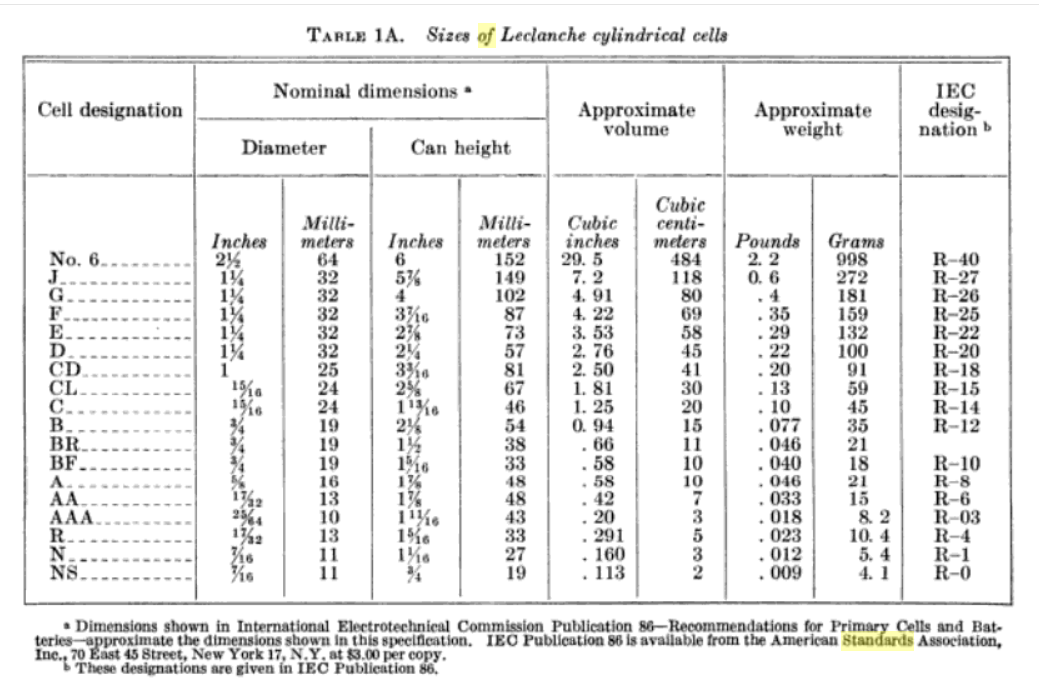
In the US, the National Bureau of Standards apparently first published the letter battery destinations in 1928 and expanded the list in 1934:

czdaRII.png


these were based in part on standardization done earlier by the IEC in France. Note that the BF battery is listed the on above table published in 1934.
 
In the US, the National Bureau of Standards apparently first published the letter battery destinations in 1928 and expanded the list in 1934:

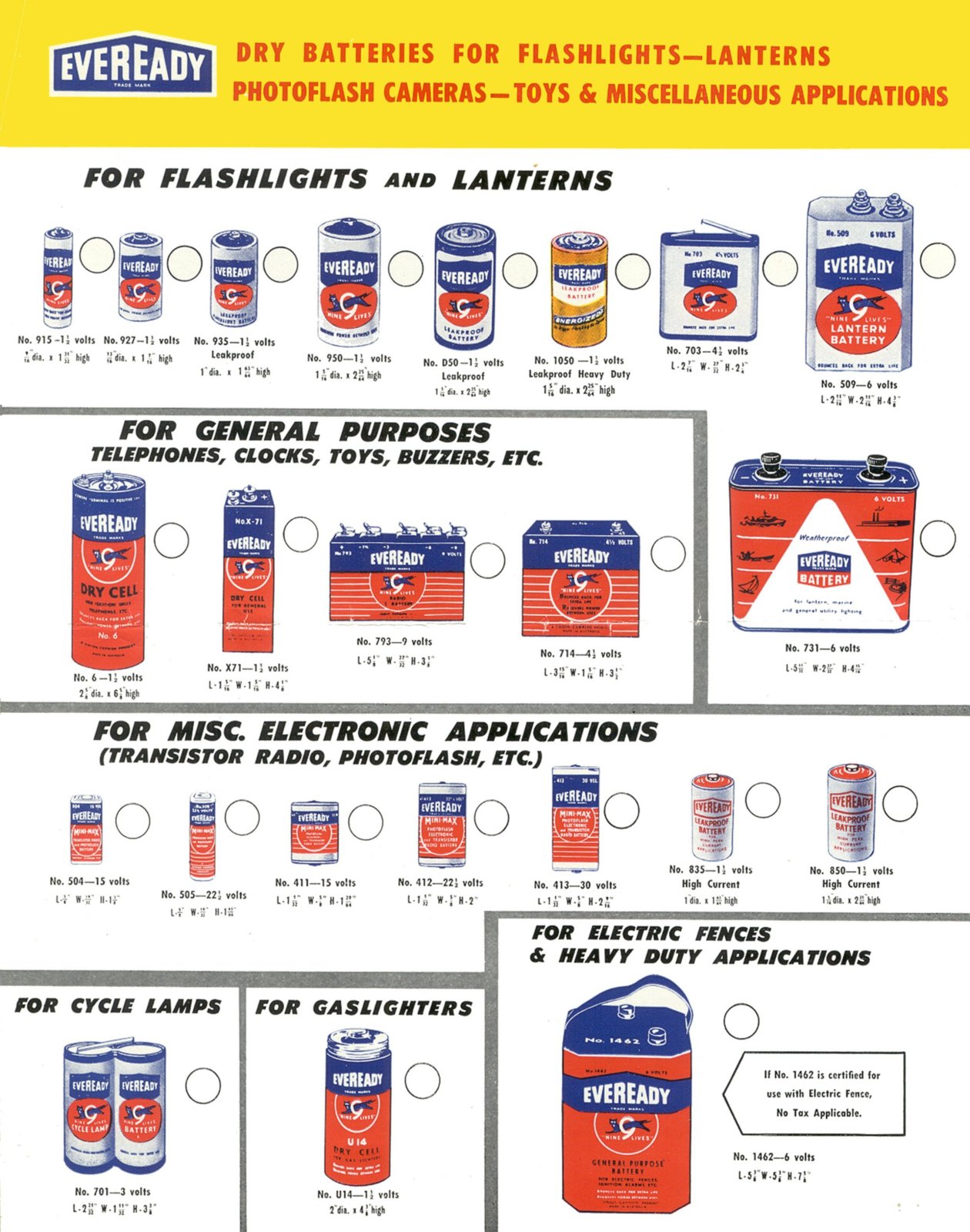
Here is a page from Eveready's Australian battery catalogue from 1962 - notice how much the batteries had already grown:

aussiebat3.jpg


I wonder if the IEC table measures the naked zinc pot, but the retail catalog shows the wrapped sizes with cardboard sleeves and end caps - that seem plausible.

But cells of today have grown further.
 
  • Like
Reactions: xxo
I wonder if the IEC table measures the naked zinc pot, but the retail catalog shows the wrapped sizes with cardboard sleeves and end caps - that seem plausible.
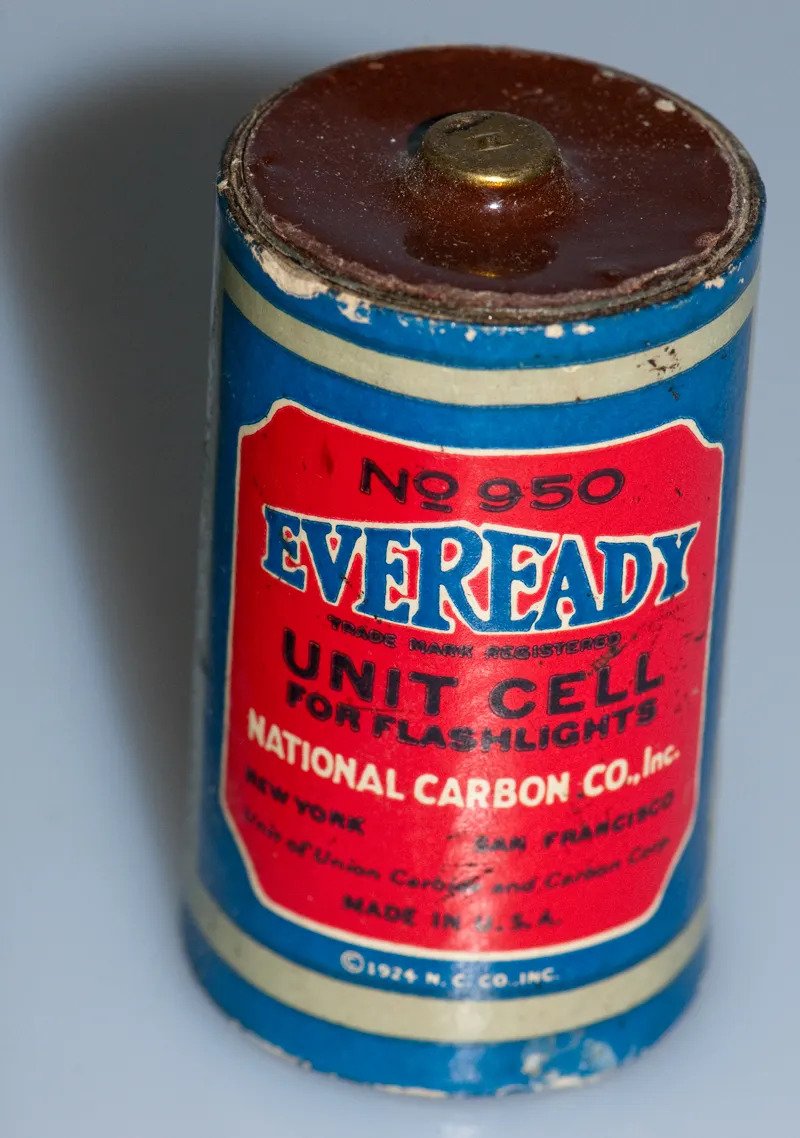
That may well be the case. With a few exceptions (most notably the No. 6) individual cells were not sold to the public, until the early 20's when Eveready came out with their "Unit Cell for Flashlights". Before that, flashlights typically used 2 or 3 cell batteries. The idea of selling single cells was that retailers didn't need to stock all those batteries and consumers were more likely to get fresher cells. which was a big deal considering the short shelf life of batteries back then.

TSsTgRu.jpg


The Unit Cells came initially in two sizes: No. 950 (later known as D) and No. 935 (later known as C).
 
Back
Top