
Certainly seems to be. It used to be super-active. I think all the talk is on reddit, (r/flashlight) but watch out, some self-important moderators there. Don't insult or joke about whatever you want or you'll get banned instantly, no warning. Rule no.1 is "be excellent to each other". Dumbest thing ever - what does that even mean? People should debate, insult freely, within reason. Adults, online, don't care about such things. I find fragile little moderator egos on reddit in general actually, full of false importance...

You are using an out of date browser. It may not display this or other websites correctly.
You should upgrade or use an alternative browser.
You should upgrade or use an alternative browser.
This forum dead or dying?
- Thread starter Beckler
- Start date


- Joined
- Nov 22, 2011
- Messages
- 7,457
- City & State/Province
- On the east coast of the yoosah. In the place wher
Bill and Ted reference.Certainly seems to be. It used to be super-active. I think all the talk is on reddit, (r/flashlight) but watch out, some self-important moderators there. Don't insult or joke about whatever you want or you'll get banned instantly, no warning. Rule no.1 is "be excellent to each other". Dumbest thing ever - what does that even mean? People should debate, insult freely, within reason. Adults, online, don't care about such things. I find fragile little moderator egos on reddit in general actually, full of false importance...
This place definitely has slowed to a crawl. Its glory days were the PK Surefire years in the 2000s. But I don't think the action's all on Reddit. They have a particular kind of discussion there. Mostly either newbies asking for recs or guys talking about the 39th identical Wurkos they ordered off Temu that month.
I wonder where a lot of the discussion actually is these days, and don't say BLF. The market for weird old stuff and Surefires/whatever is as strong as ever on eBay but I literally can't find any place people are talking about these things.
I wonder where a lot of the discussion actually is these days, and don't say BLF. The market for weird old stuff and Surefires/whatever is as strong as ever on eBay but I literally can't find any place people are talking about these things.
Last edited:

+
Soo few P60 lights anymore,
the simple modding or getting a new drop-in is becoming extinct, sad.
> Amutorch and Nightwatch push the boundaries of Amp current and Lumens made, real enthusiast stuff
....and yet, a number of people here would wonder if they run off alkalines, even more sad.
Soo few P60 lights anymore,
the simple modding or getting a new drop-in is becoming extinct, sad.
> Amutorch and Nightwatch push the boundaries of Amp current and Lumens made, real enthusiast stuff
....and yet, a number of people here would wonder if they run off alkalines, even more sad.
- Joined
- Nov 22, 2011
- Messages
- 7,457
- City & State/Province
- On the east coast of the yoosah. In the place wher
Technically they might, if all for a few seconds...+
Soo few P60 lights anymore,
the simple modding or getting a new drop-in is becoming extinct, sad.
> Amutorch and Nightwatch push the boundaries of Amp current and Lumens made, real enthusiast stuff
....and yet, a number of people here would wonder if they run off alkalines, even more sad.

- Joined
- May 31, 2021
- Messages
- 538
I think we are humming along. Communities can naturally go thru a roller coaster phase.


![Pampers Sensitive Baby Wipes, Clinically Proven, Fragrance Free, Unscented, Water Based, Hypoallergenic, Multi-Use, Hand Wipes 336 Wipes Total (6X Flip-Top Packs) [Packaging May Vary]](https://m.media-amazon.com/images/I/41KLBHu9CAL._SL500_.jpg)





As an Amazon Associate we earn from qualifying purchases. Product prices and availability are accurate as of the date/time indicated and are subject to change.
+Technically they might, if all for a few seconds...
No, I own both, they don't just step down immediately.
My Nightwatch has a metal tab for tailcap contact to take huge current, a standard spring wouldn't take it.
- Joined
- Nov 22, 2011
- Messages
- 7,457
- City & State/Province
- On the east coast of the yoosah. In the place wher
I'm talking about the alkaleaks lol...8 seconds of turbo then rapidly declining moonlight+
No, I own both, they don't just step down immediately.
My Nightwatch has a metal tab for tailcap contact to take huge current, a standard spring wouldn't take it.
+I'm talking about the alkaleaks lol...8 seconds of turbo then rapidly declining moonlight
ah ok.
Last edited:
Here's my take on this. I've been posting here on and off for the last 21.5 years (it's really been that long?). It was actually LEDs which got me interested in lighting in the first place. Back then LEDs were not much more efficient than many incandescents. Two things attracted me to them however. First was the fact they were immune to the shocks which destroyed many bulbs in the halogen bike lights I was using at the time. Or rather, tried to use and give up on because the bulbs were costing me too much. I was riding in the dark at night until LEDs came along. Then I modified one of those halogen lights with 5mm LEDs. I think at the time they were already twice as efficient as halogens, so it was step up in output, plus they just never burned out.
The other reason I liked LEDs was the fact they were available in high color temperatures. In fact, that was ALL white LEDs were available in back then. Higher color temperatures made for better seeing at night, to the point I would say they were 3 or 4 times more effective than the halogens they replaced, even though lumen output was only maybe 2 times as high. Prior to this, the only other high CCT light source was fluorescents, which of course could not be miniaturized like LEDs. I thought of using them to light HO passenger cars and other scale model imitations of fluorescent lighting.
Back then we regularly saw huge increases in LED efficiency. We went from 25 lm/W to over 100 lm/W in a relatively short period. The link to my LED testing thread in my signature gives a nice timeline of this. Finally around the late 2010s LED efficiency gains started petering out. It had to happen eventually as we were approaching theoretical efficiency limits. Some production LEDs were hitting 230 lm/W, for example.
Despite the plateauing of efficiency, LEDs still remained interesting for a while. We were making huge strides in more consistent binning, along with greatly improved color rendering, plus availability in CCTs ranging from 1800K to 6500K and beyond. Those early LEDs were typically well over 6500K and had CRIs in the 60s or 70s. Also, costs were dropping dramatically. I remember when power LED emitters were $30 a pop. They kept dropping in price. Now many are well under $1. Mid-power LEDs used in things like LED tubes or bulbs can be now be had for under one cent in quantities of a few thousand.
Lately the pace of everything slowed. Obviously prices can't drop lower than the price of raw materials. We won't be seeing LEDs for 0.01 cents, for example. CRI more or less plateaued around 95 but some LEDs have managed 98 or 99. Again, not much room for improvement. In short, LEDs became commodity products we see in literally everything, just as I had predicted would happen many years ago. Generally once something becomes a commodity it loses interest as a hobby. There's no point to doing mods these days when you can get 700 lumen AA lights for something like $20 on Aliexpress. Plenty of people I'm sure are playing with LEDs to light scale models and other stuff. Maybe that facet of the hobby is still vibrant.
The other reason I liked LEDs was the fact they were available in high color temperatures. In fact, that was ALL white LEDs were available in back then. Higher color temperatures made for better seeing at night, to the point I would say they were 3 or 4 times more effective than the halogens they replaced, even though lumen output was only maybe 2 times as high. Prior to this, the only other high CCT light source was fluorescents, which of course could not be miniaturized like LEDs. I thought of using them to light HO passenger cars and other scale model imitations of fluorescent lighting.
Back then we regularly saw huge increases in LED efficiency. We went from 25 lm/W to over 100 lm/W in a relatively short period. The link to my LED testing thread in my signature gives a nice timeline of this. Finally around the late 2010s LED efficiency gains started petering out. It had to happen eventually as we were approaching theoretical efficiency limits. Some production LEDs were hitting 230 lm/W, for example.
Despite the plateauing of efficiency, LEDs still remained interesting for a while. We were making huge strides in more consistent binning, along with greatly improved color rendering, plus availability in CCTs ranging from 1800K to 6500K and beyond. Those early LEDs were typically well over 6500K and had CRIs in the 60s or 70s. Also, costs were dropping dramatically. I remember when power LED emitters were $30 a pop. They kept dropping in price. Now many are well under $1. Mid-power LEDs used in things like LED tubes or bulbs can be now be had for under one cent in quantities of a few thousand.
Lately the pace of everything slowed. Obviously prices can't drop lower than the price of raw materials. We won't be seeing LEDs for 0.01 cents, for example. CRI more or less plateaued around 95 but some LEDs have managed 98 or 99. Again, not much room for improvement. In short, LEDs became commodity products we see in literally everything, just as I had predicted would happen many years ago. Generally once something becomes a commodity it loses interest as a hobby. There's no point to doing mods these days when you can get 700 lumen AA lights for something like $20 on Aliexpress. Plenty of people I'm sure are playing with LEDs to light scale models and other stuff. Maybe that facet of the hobby is still vibrant.
Last edited:
- Joined
- Nov 22, 2011
- Messages
- 7,457
- City & State/Province
- On the east coast of the yoosah. In the place wher
Remember when the Luxeon rebels first came out? And the Yujis?Here's my take on this. I've been posting here on and off for the last 21.5 years (it's really been that long?). It was actually LEDs which got me interested in lighting in the first place. Back then LEDs were not much more efficient than many incandescents. Two things attracted me to them however. First was the fact they were immune to the shocks which destroyed many bulbs in the halogen bike lights I was using at the time. Or rather, tried to use and give up on because the bulbs were costing me too much. I was riding in the dark at night until LEDs came along. Then I modified one of those halogen lights with 5mm LEDs. I think at the time they were already twice as efficient as halogens, so it was step up in output, plus they just never burned out.
The other reason I liked LEDs was the fact they were available in high color temperatures. In fact, that was ALL white LEDs were available in back them. Higher color temperatures made for better seeing at night, to the point I would say they were 3 or 4 times more effective than the halogens they replaced, even though lumen output was only maybe 2 times as high. Prior to this, the only other high CCT light source was fluorescents, which of course could not be miniaturized like LEDs. I thought of using them to light HO passenger cars and other scale model imitations of fluorescent lighting.
Back then we regularly saw huge increases in LED efficiency. We went from 25 lm/W to over 100 lm/W in a relatively short period. The link to my LED testing thread in my signature gives a nice timeline of this. Finally around the late 2010s LED efficiency gains started petering out. It had to happen eventually as we were approaching theoretical efficiency limits. Some production LEDs were hitting 230 lm/W, for example.
Despite the plateauing of efficiency, LEDs still remained interesting for a while. We were making huge strides in more consistent binning, along with greatly improved color rendering, plus availability in CCTs ranging from 1800K to 6500K and beyond. Those early LEDs were typically well over 6500K and had CRIs in the 60s or 70s. Also, costs were dropping dramatically. I remember when power LED emitters were $30 a pop. They kept dropping in price. Now many are well under $1. Mid-power LEDs used in things like LED tubes or bulbs can be now be had for under one cent in quantities of a few thousand.
Lately the pace of everything slowed. Obviously prices can't drop lower than the price of raw materials. We won't be seeing LEDs for 0.01 cents, for example. CRI more or less plateaued around 95 but some LEDs have managed 98 or 99. Again, not much room for improvement. In short, LEDs became commodity products we see in literally everything, just as I had predicted would happen many years ago. Generally once something becomes a commodity it loses interest as a hobby. There's no point to doing mods these days when you can get 700 lumen AA lights for something like $20 on Aliexpress. Plenty of people I'm sure are playing with LEDs to light scale models and other stuff. Maybe that facet of the hobby is still vibrant.
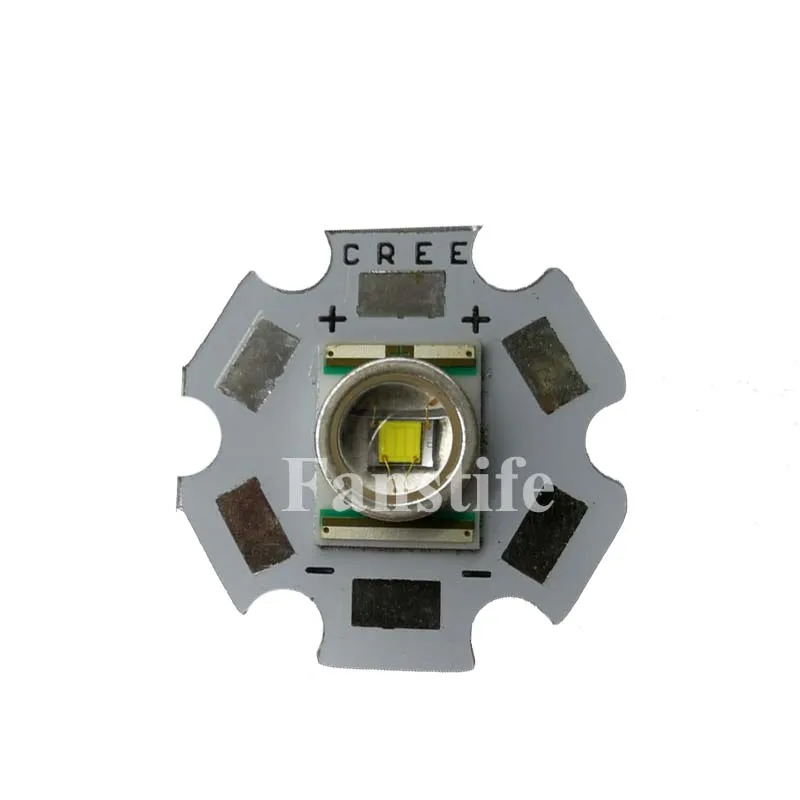
Yep. I remember the Luxeon stars as well. In fact, I have a Luxeon star running continuously at 350 mA since January 2004 in my workroom. ~190K hours on it. The output is now very yellow, somewhat dimmed from when new, and the dome looks dried out. But it still works.Remember when the Luxeon rebels first came out? And the Yujis?
I never had a chance to play with the Yujis.

JimIslander
Enlightened
- Joined
- Mar 4, 2012
- Messages
- 798
Gigantic obnoxious ads. Just a very uncomfortable forum compared to so many others. I almost hate coming here. And I definitely hate all the gigantic obnoxious ads.

Have you tried going to account/preferences then check disable advertising?Gigantic obnoxious ads. Just a very uncomfortable forum compared to so many others. I almost hate coming here. And I definitely hate all the gigantic obnoxious ads.
JimIslander
Enlightened
- Joined
- Mar 4, 2012
- Messages
- 798
Have you tried going to account/preferences then check disable advertising?
I did in the past. Somehow the forum turned it back on. I'll check it again.
EDIT: Many thanks!
That did the trick. Not sure how it got turned back on.

Dead?? Let me get my cattle-prod.... Nope! Still alive. :grin2:
I have "lurked" here on and off for better than 20 years. Participation on CPF seems to ebb and flow, as it does with most niche internet forums. The administration of this site prior to my sign-up was oppressive and ridiculously biased. I browsed here for experienced information, got what I needed and moved on without interaction. Only after the site changed hands, and it became more accommodating did I decide to "sign up". I'm here for information regarding flashlights/flashlight technology....not drama. My posts/replies are limited. In the short time I've been a 'member' here I've found there are forums to avoid (a.k.a. "Block"), making the experience more suitable to my preferences (thanks to current Admin). It's great to have the ability to tailor your browsing preferences. I for one appreciate it.
This website is Iconic. The legacy members here are well versed and eager to share their experiences and observations. It's especially refreshing to see that new members are treated with a welcoming atmosphere, and the "old timers" are more free to share their thoughts.
This website is Iconic. The legacy members here are well versed and eager to share their experiences and observations. It's especially refreshing to see that new members are treated with a welcoming atmosphere, and the "old timers" are more free to share their thoughts.

Still alive, I would say; I don't post as much, but I do check in every now and then. And it has definitely changed a lot since I first discovered the forum though. ~20 years ago it was sort of like "magic" to me with LEDS (power LEDs that is, 1-3 Watts+, blue light coverted to white with phosphorus) coming out and improving so rapidly. Growing up, I was used to Maglites and Mini-Maglites so power LEDs were incredibe to me. Friend had a Surefire Z2 (P60 incan) circa 2000 which I was impressed by, but the cost of the primary CR123s was a bit much for only an hour of runtime (I still keep a Z2 P60 with CR123s ready, but it's not my primary light). With the new LEDs, people here were among the first to innovate and of course tons of mods were created before main stream industry caught up. I still remember folks (including myself) looking for the best bins (tint, forward Vf, efficiency, etc.) of the Luxeon III.. Very exciting time back then.
- Joined
- Nov 22, 2011
- Messages
- 7,457
- City & State/Province
- On the east coast of the yoosah. In the place wher
Then you're using your cattle prod wrong...:dedhorse::dedhorse::dedhorse:Dead?? Let me get my cattle-prod.... Nope! Still alive. :grin2:


