Digital meter question??

Candle Power Forums

Help Support Candle Power:

Robocop

Mammoth Killer
Joined
Nov 13, 2003
Messages
2,967
City & State/Province
Birmingham Al.
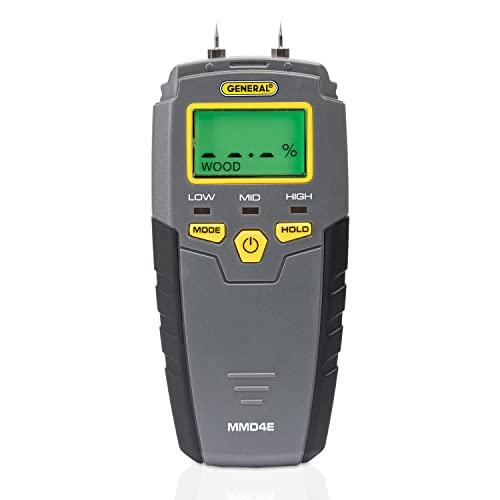
I have just found the small DMM on sale at Harbor Freight and had to have it.It says it is a 7 function unit and seems to be able to do most of what I need as far as modding goes.My question is that I have read here that some devices must have a DMM that measures in a pulse method in order to be accurate.Are most of my LEDs going to be able to use this unit as far as measuring amps?
I would like to be able to read the amount of amps on a few of my lights however they are all LED.Are all LED lights pulsed or can I check mah with a standard DMM?
Lets take the ARC-LS for example...is this light able to give a MAh reading with a regular DMM?...I have many ARCs and would like to test them all.
 
Yup, should serve you just fine for measuring current draws. Current actually delivered to the LED can be another matter, but that would involve unsoldering wires and the like, and if you're up to that you can deal with the related issues.

To measure current draw, you can usually just unscrew the end cap, set your meter on a high enough amps range (typically the 10 A range on such meters) and connect the meter leads from the body of the light and the negative end of the bottom cell (completing the circuit like the end cap would).

Remember, while you can measure Voltage across the circuit, current measurments must always be made with the current actually flowing through the meter.

Doug Owen
 
I bought the harbor freight meter and find that the 10A scales give more accurate readings than the 200mA scale. There must be quite a bit of resistance in the 200mA and below range /ubbthreads/images/graemlins/frown.gif

I wonder if there is anything that could be done to remedy that... or at least make the readings in the lower ranges more accurate.
 
As an Amazon Associate we earn from qualifying purchases. Product prices and availability are accurate as of the date/time indicated and are subject to change.
Thanks for the help on this and I am still trying to get these readings figured out.I really only wanted a DMM to sort through my stash of batteries and use the ones with the least charge first.I could not pass this up as 3 dollars is a great deal on this.
I tried a search here and found nothing about the effects of charge left in a battery changing the current reading on a light.I noticed if I use a fresh cell in my ARC-LS vs a partially depleted cell I get very different readings for current when tested at the tail cap.Is this normal or am I doing something wrong?I thought with a regulated light the current would be the same no matter the voltage or at least until it fell out of regulation.Can anyone say why I get different readings with the same light but different 123 cells?
 
[ QUOTE ]
Robocop said:
Thanks for the help on this and I am still trying to get these readings figured out.I really only wanted a DMM to sort through my stash of batteries and use the ones with the least charge first.I could not pass this up as 3 dollars is a great deal on this.
I tried a search here and found nothing about the effects of charge left in a battery changing the current reading on a light.I noticed if I use a fresh cell in my ARC-LS vs a partially depleted cell I get very different readings for current when tested at the tail cap.Is this normal or am I doing something wrong?I thought with a regulated light the current would be the same no matter the voltage or at least until it fell out of regulation.Can anyone say why I get different readings with the same light but different 123 cells?

[/ QUOTE ]im pretty sure at tail cap it will vary.but at led its self it will stay consistant
 
Robocop,

Regulation means that the juice supplied to the LED is regulated. The juice drawn from the battery (what you are measuring at the tail cap) will vary.

Example time. Let's say we have an LED light with a regulator using a single 123 cell. Our example light has been set up with the regulator circuit to supply exactly 1 watt to the LED as 333 ma of current and 3 volts. But no regulator is 100% efficient, so for this example let's say that the circuit is a constant 80% efficient (real regulator circuits rarely have a constant efficiency). That means that we need 1.25 watts from the battery (1 watt output / 80% = 1.25 watt input to circuit). A brand new 123 cell is about 3.2 volts, so we start out drawing about 390 ma of current from the cell (measured at the tailcap). As the cell voltage drops, the current draw will rise. When the cell voltage is down to 3.0 v, current will be 417 ma. When the cell voltage is 2.9 v, current draw will be 431 ma. At 2.7 v from the cell, current draw will be 463 ma.

Also, 123 cells hold their no-load voltage pretty well. But when they are used up, their ability to supply voltage AND current (POWER) drops off. If you are using the DMM to check the no-load voltage of the cells to see which ones are still good to use, you won't really get good answers. To check the 'status' of 123 cells, you should measure the "flash amps" of the cell. Search the forum for "flash amps" for the discussion of how/why.
 
[ QUOTE ]
Negeltu said:
I bought the harbor freight meter and find that the 10A scales give more accurate readings than the 200mA scale. There must be quite a bit of resistance in the 200mA and below range /ubbthreads/images/graemlins/frown.gif

I wonder if there is anything that could be done to remedy that... or at least make the readings in the lower ranges more accurate.

[/ QUOTE ]

You can figure out what that secret resistance is you know.... .2 Volts (the lowest DC Volts range) divided by the range in Amps. 10 A is .2/20 or .01 Ohm, since the real full scale range is 20 A. Too bad the meter will only take this much power (20 A times .2 Volts is 4 Watts...) for a short time. So the 200 mA range is .2 Volts/.2 Amps, one ohm. 10 ohms for the 20 mA range.....

You might want to check the meter before you hack into it, they tend to be pretty good, but you can easily modify the 'shunt' (one ohm resistor inside used) up or down a bit to calibrate as needed.

Doug Owen
 
I've been thru about a dozen of these. At $3-4 they are almost disposable. Often, they won't quite zero, but so far it hasn't been enough of a problem to drive me to fix it. I have a couple of better meters when necessary. I believe the 10a scale is using a 14ga (or Chineses equivalent) wire about 1 inch long for the resistor, if it's still the same as a couple I have had apart. It will melt the plastic if you take too long to get your reading at 10amps. It's not bad at 1-2 amps, but it still best to keep the reading time short to avoid influencing it.
 
[ QUOTE ]
Negeltu said:
I bought the harbor freight meter and find that the 10A scales give more accurate readings than the 200mA scale. There must be quite a bit of resistance in the 200mA and below range /ubbthreads/images/graemlins/frown.gif

I wonder if there is anything that could be done to remedy that... or at least make the readings in the lower ranges more accurate.

[/ QUOTE ]

The rule of thumb in the old days was to choose a range where the reading is in the middle of the scale (or was that the first 2/3). This was the most accurate area of the meter. I wonder if that still applies.

If you accidently leave the probes in the 10 AMP jacks while using the 200ma scale you get some strage readings. /ubbthreads/images/graemlins/smile.gif

Daniel
 
I have figured out how to measure my batteries,with this DMM,and determine voltage left in each one however the tail cap method for measuring current is hard to figure out.
Each setting I turn the dial to seems to give me an error reading showing simply a 1 on the readout.The instructions said if measuring anything over 200 Mah to put the neg.lead into the 10 amp slot.I do not know exactly what each setting means as far as when I turn the dial selector.When using the voltage settings it seems simple enough.With each turn of the selector it appears to simply extend the reading out a little.For example one of my 123 cells showed a voltage of 3 with one setting.I moved it over one click and it showed 3.3 then another click and it gave 3.032 or something.It seems to just move the decimal point with each setting allowing a more precise reading....is this correct?
Anyone with a meter like this tell me exactly where to place the leads for simple voltage readings of 123 cells.All the figures in the instructions are kind of confusing to me.Also as far as measuring current with the tail cap method what configuration is also used with this meter?....I am only planning on using it to measure simple mods and should not exceed much more than 1 amp on any light I own.Can anyone also explain why,when testing at the tail cap,the light will shine when touched with the probes attatched only on a few of the settings?I assume if it lights when touched that this is the setting I should use?Also when I use one particular setting it will light very dim but show no reading....sorry for the many questions however I need some basic instructions on what to do with this meter.Thanks for any help.
Also what effect will it have if the 9 volt battery in this meter is weak?I dont know how long this meter sat on the shelf and it may have a weak cell.Could this also cause the meter to show weird readings?
 
I have one of these meters too..CEN-TEC P30756. When measuring the tail cap current, if you are getting only readings of 1 on the DCA scale, that means you are drawing more than 200ma and need to switch to the 10ADC jack. You move the RED lead to this jack and put the dial on 10A. This meter has a low battery indicator for the battery insde the meter, so unless this is on, the battery is fine and the readings should be accurate.
 
My readings are very wide apart on the 200mA and the 10A ranges. For instance I have a luxeon star 1watt being powered by 2 lithium AA's in a light... If I test it's current with the 200mA scale... I get a reading between around 78mA... on the 10A scale I get a reading in the 190's ... my old analog micronta tells me on it's 500mA scale that it is 170mA.. How exactly would I go about modifying the Cen-Tech to get more accurate readings?
 

Latest posts

Back
Top